Rigid vs Flexible vs Foil Dryer Vent: Which Is Safe and Up to Code?
Not all dryer duct is the same. Rigid metal belongs inside walls, semi-rigid metal is the right choice behind the dryer, and foil or vinyl hoses should be replaced. Here is why.
By the Dryer Vent Cleaning Sarasota editorial team · Last reviewed October 19, 2026
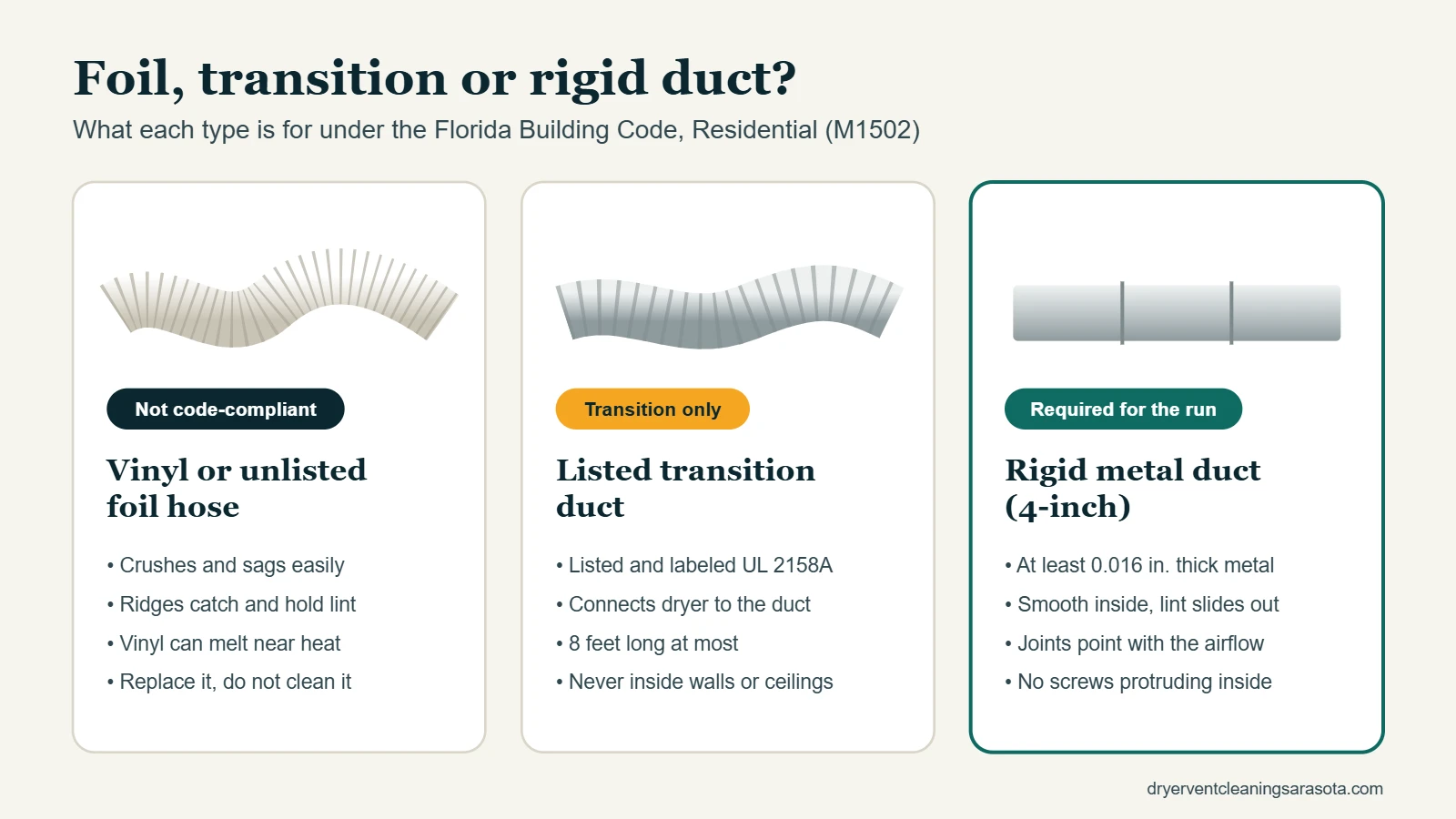
Short answer: use smooth rigid metal for the main run inside walls, floors and ceilings. Use a short semi-rigid metal transition hose behind the dryer. Replace foil or vinyl accordion hoses: they crush, sag and trap lint.
The four types of dryer vent duct
| Type | What it is | Where it belongs | Verdict |
|---|---|---|---|
| Rigid metal | Smooth galvanized or aluminum pipe, usually 4 inches | The main run inside walls, attics and ceilings | Best choice |
| Semi-rigid metal | Aluminum duct that bends but holds its shape | The transition between dryer and wall | Good choice behind the dryer |
| Flexible foil | Thin foil over a wire coil, accordion style | Only a short, listed transition hose, if at all | Replace when possible |
| Vinyl or plastic | White plastic accordion hose | Nowhere | Replace now |
What does Florida code require?
The Florida Building Code, Residential, follows the International Residential Code for dryer exhaust. In plain terms:
- Concealed exhaust ducts must be smooth-interior rigid metal, at least 4 inches in diameter.
- The transition duct between the dryer and the wall must be listed for the purpose, a single length no longer than 8 feet, and never hidden inside a wall or ceiling.
- Joints run with the male end pointing in the direction of airflow, and screws must not stick into the duct where they catch lint.
- The duct must end outdoors with a backdraft damper and no screen.
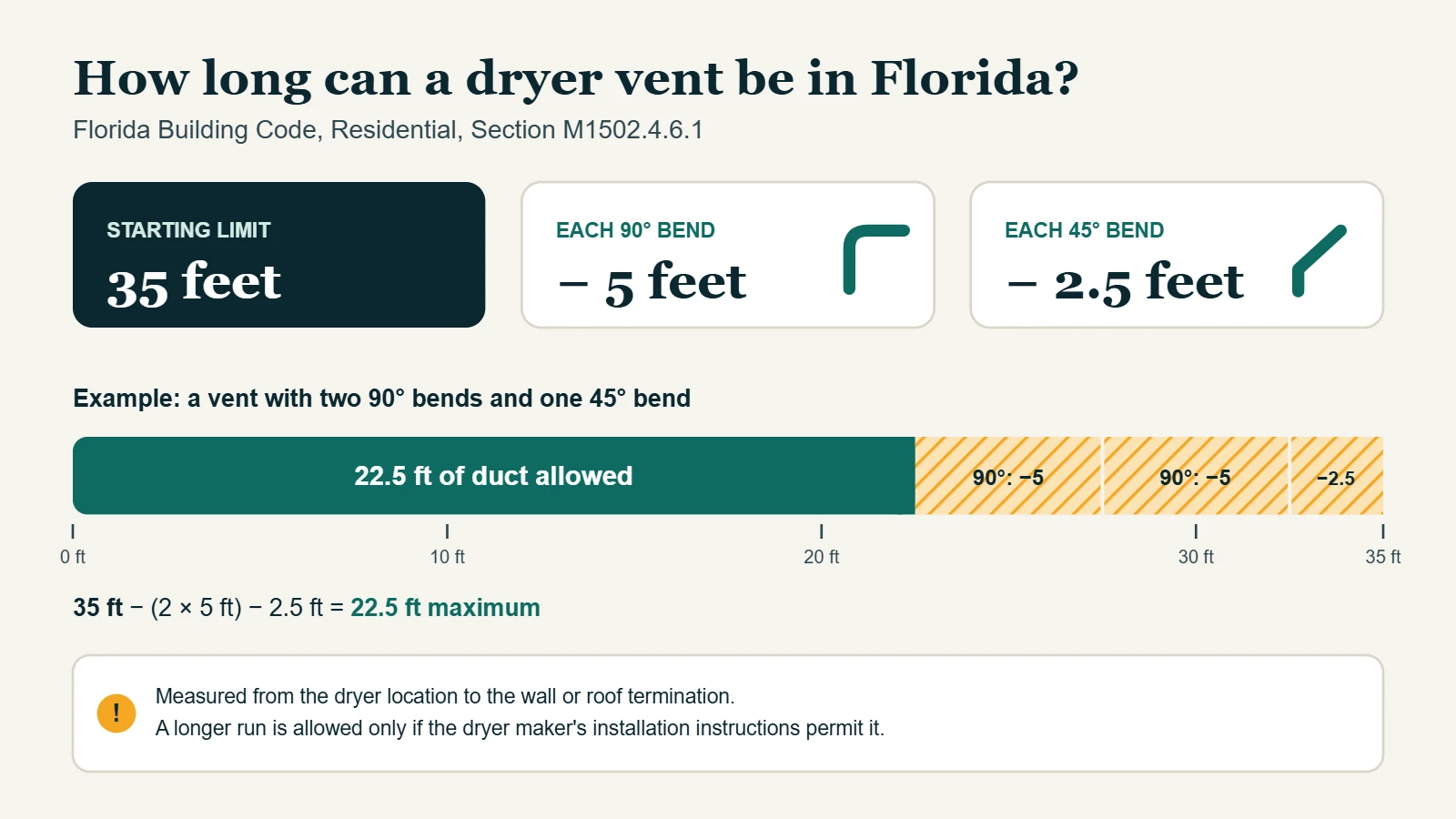
- The maximum length is 35 feet, minus 2.5 feet per 45-degree bend and 5 feet per 90-degree bend, unless the dryer maker allows more.
Local amendments and the dryer maker’s instructions can add requirements, so check both when replacing a vent.
Why foil and vinyl hoses cause problems
The ridges in accordion hose catch lint on every load. The hose sags between supports, creating low spots where lint piles up. And when the dryer is pushed back, it flattens, cutting airflow sharply. Vinyl is the worst: it is not designed for dryer heat.
Which should you choose?
- Main run inside the house: smooth rigid metal, with as few bends as possible.
- Behind the dryer: a short semi-rigid metal transition, with enough slack to pull the dryer out without crushing it.
- Outside: a dryer vent hood with a working damper, never a fine mesh screen.
If your home still has foil or vinyl, a dryer vent repair visit can replace it, usually alongside a cleaning.
Dryer vent duct questions
Is flexible foil dryer vent duct allowed?
Only as a short, listed transition hose between the dryer and the wall, no longer than 8 feet and never concealed. Ducts inside walls, floors and ceilings must be smooth rigid metal.
Is vinyl dryer vent hose safe?
No. Vinyl or plastic hose is not made for dryer heat, crushes easily and traps lint. Replace it with semi-rigid or rigid metal.
What size should a dryer vent be?
At least 4 inches in diameter for standard residential dryers, which matches most dryer outlets and code requirements.
Can I use screws to join dryer vent pipe?
Avoid screws that poke into the duct, because they catch lint. Use foil tape or clamps, with each joint pointing in the direction of airflow.
Sources
Swap foil for a code-ready rigid duct
Call now to talk to a local technician and get a price before any work starts.