The Sarasota Homeowner’s Dryer Vent Guide: Signs, Code and Care
Everything Sarasota homeowners need to know about dryer vent cleaning: why vents clog faster here, how often to clean, what a cleaning includes, costs, condo rules and Florida code.
By the Dryer Vent Cleaning Sarasota editorial team · Last reviewed October 19, 2026
Everything a Sarasota homeowner, renter, or condo board needs to know — climate factors, warning signs, cost, code, and condo/HOA responsibility.
Why Dryer Vent Cleaning Is Different in Sarasota
Dryer vent maintenance advice written for the rest of the country doesn’t fully apply on Florida’s Gulf Coast. Three local factors make Sarasota County duct runs clog faster than the national average:
- Year-round humidity. Florida’s moisture-heavy air slows drying, so dryers run longer per cycle and push more lint through the duct every time they run.
- Long, complex condo duct runs. Mid- and high-rise buildings along the Sarasota/Siesta Key corridor often route ducts through long horizontal runs with multiple elbows — exactly the conditions that trap lint.
- Seasonal snowbird usage. Units sitting vacant for months and then running heavily in season can mask gradual buildup until it becomes a real fire or efficiency problem.
How Often Should You Clean Your Dryer Vent?
Most manufacturers and fire-safety authorities recommend professional cleaning at least once a year for an average household. In Sarasota, we generally recommend adjusting that based on your situation:
- Single-family home, 1–3 people: once a year.
- Larger household or daily heavy use: every 6–9 months.
- Condo or high-rise unit with a long duct run: every 6–12 months, since longer runs trap lint faster.
- Rental or short-term rental property: at least once a year, ideally timed between tenant turnovers.
- Seasonal/snowbird home: have it checked at the start of each season before heavy use resumes.
Signs Your Dryer Vent Needs Cleaning
Watch for these warning signs between scheduled cleanings:
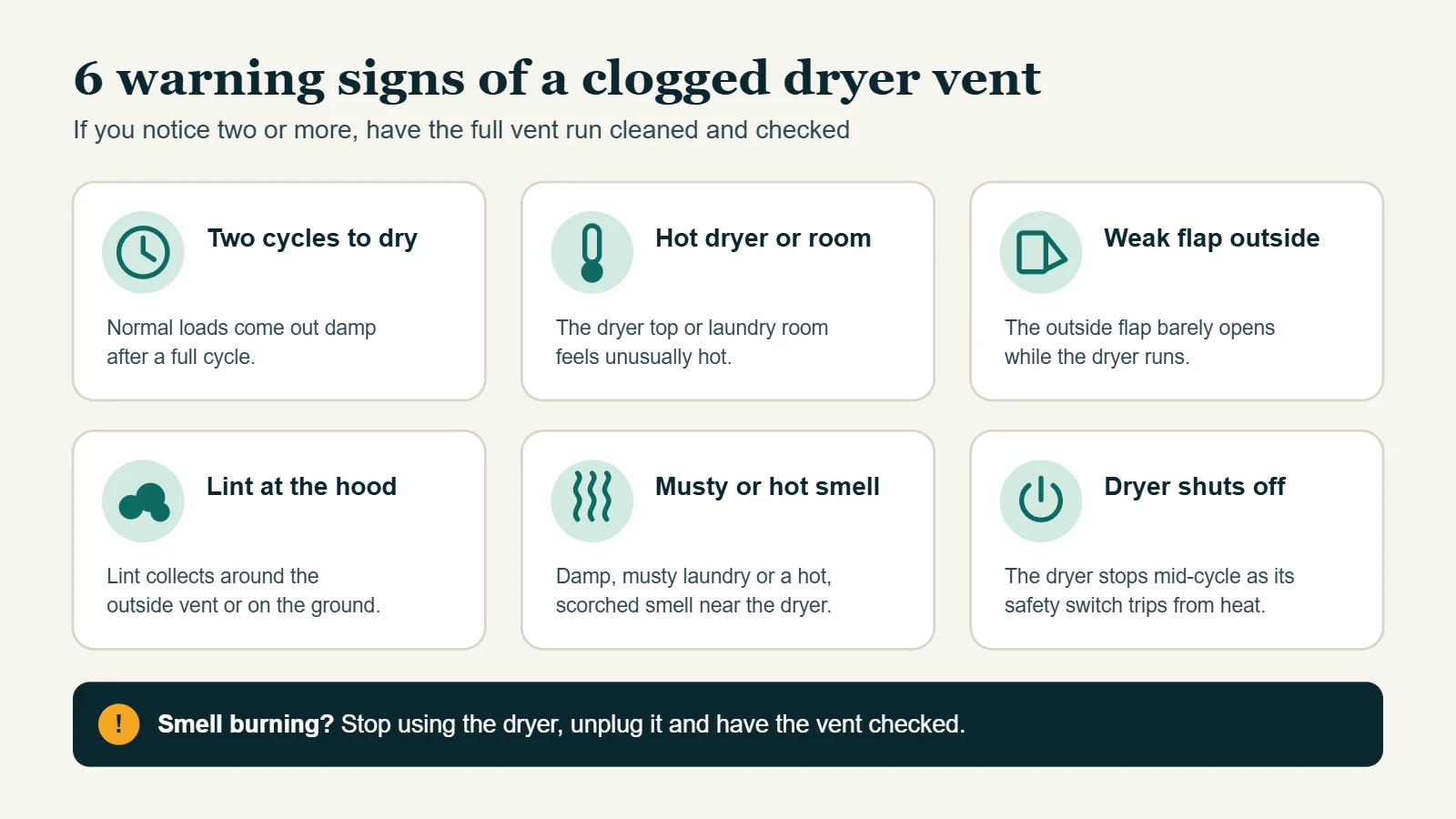
- Clothes take two or more cycles to fully dry
- The laundry room feels noticeably hot or humid while the dryer runs
- A burning smell when the dryer is on
- Visible lint buildup around the exterior vent hood
- The exterior vent flap barely opens when the dryer is running
- It’s been 12+ months since your last professional cleaning
If you notice a burning smell specifically, stop using the dryer and have it inspected before running it again.
What’s Involved in a Professional Cleaning
A proper cleaning covers the full duct path, not just what you can reach from the dryer:
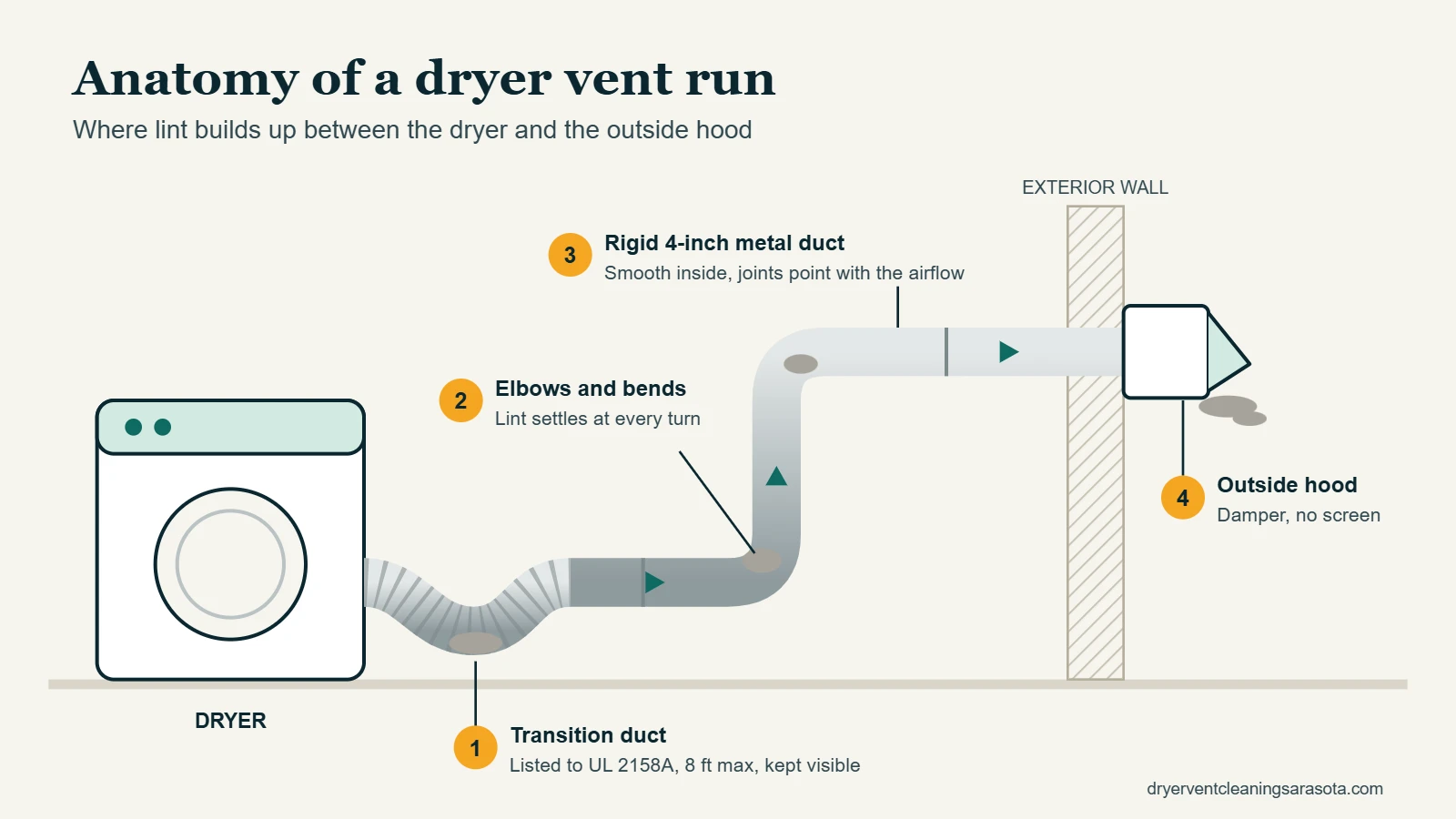
- Inspection of the duct run and exterior termination before any work begins
- Rotary brush and high-powered vacuum extraction from the lint trap connection to the exterior cap
- Inspection and clearing of the exterior vent hood and flap
- Before and after photo documentation
- Flagging of any damaged, crushed, or non-code-compliant ducting for repair
A cleaning that skips the exterior termination or only vacuums the first few feet of duct is not a full cleaning — ask what’s included before you book.
DIY vs. Professional: What’s Actually Safe to Do Yourself
Cleaning the lint trap itself after every load is something every household should do — that’s basic maintenance, not professional work. Full duct cleaning is a different matter. It’s possible to do yourself with the right tools, but incomplete DIY cleaning is one of the most common problems we find: homeowners clear the first few feet of accessible duct and leave compacted lint further down the run, especially past elbows or in long horizontal sections.
If your duct run is short and straight, basic DIY tools can work. If you have a long run, multiple elbows, a second-story or condo installation, or haven’t had it professionally cleaned in several years, a professional rotary-brush cleaning is the safer route.
How Much Does It Cost?
Pricing depends mainly on duct length, number of elbows, and accessibility. Single-family homes typically run $100–$250, and condo and high-rise units with longer runs are usually more, and HOA/bulk programs are quoted separately. See our full dryer vent cleaning cost guide for a detailed breakdown by property type.
Who’s Responsible in a Condo, HOA, or Rental?
This is the single most common point of confusion we hear from Sarasota renters and condo owners. There is no one statewide rule — responsibility is set by your association’s governing documents (master deed, bylaws, rules) or your lease, and it varies building by building and landlord by landlord.
In practice: many condo associations treat the duct running through common walls or risers as a building responsibility, while the unit owner is responsible for the connection from the dryer to the wall. Rental responsibility usually depends on what the lease says about appliance maintenance. If you are unsure, check your documents or ask your board or landlord directly. A short written summary from the technician gives you a record either way. (This is general information, not legal advice.)
Florida Code & Duct Length Requirements
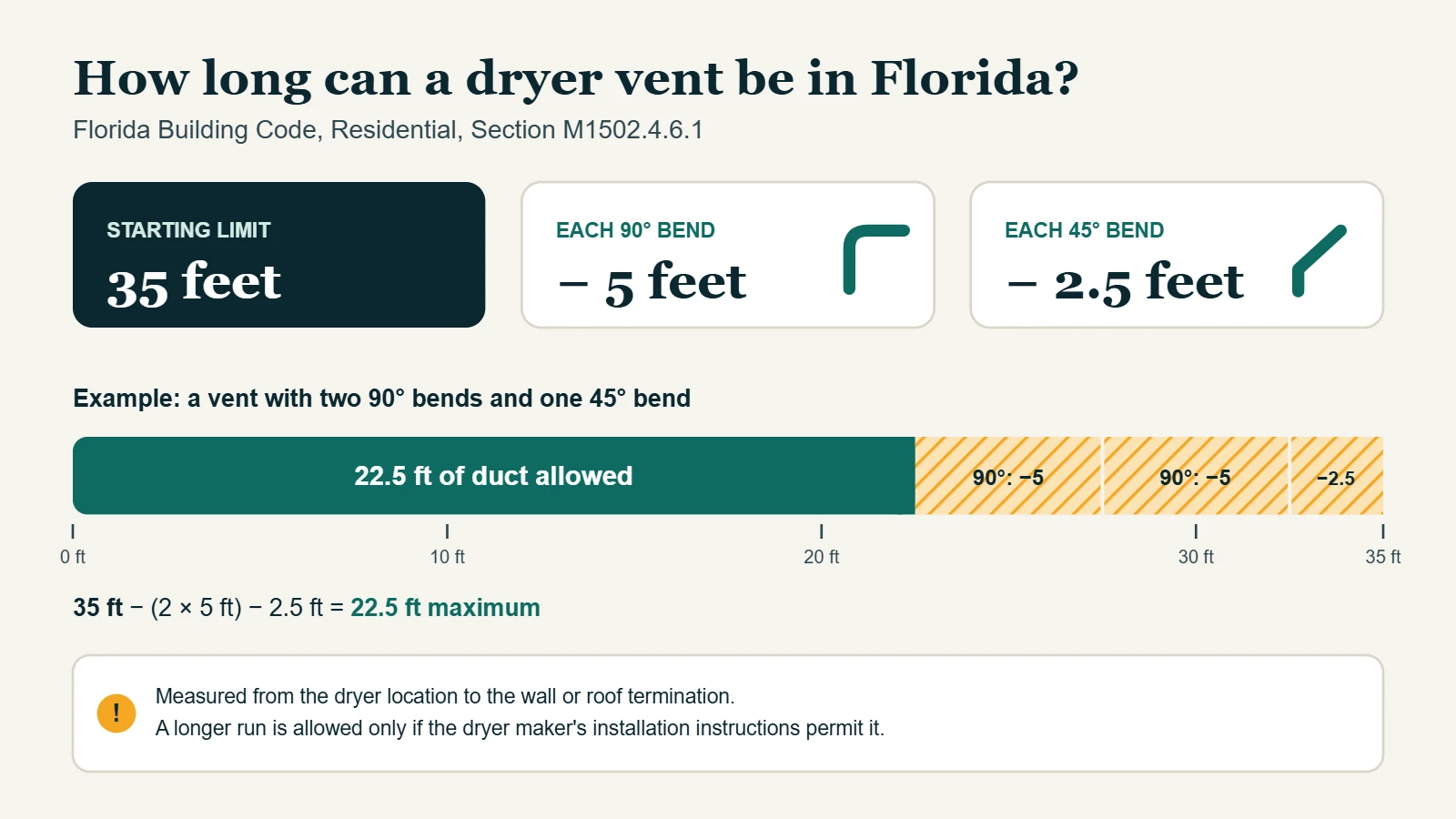
Florida’s adopted building code sets maximum dryer duct lengths, with deductions for each elbow in the run, or follows the dryer manufacturer’s installation instructions when those are more restrictive. Rigid metal duct is required in most situations — flexible foil or vinyl accordion duct is not code-compliant and is a known fire hazard. A good technician checks the run against current code and flags anything that needs to be brought up to standard.
Fire Safety: Why This Isn’t Just About Dry Clothes
According to National Fire Protection Association (NFPA) research, U.S. fire departments responded to an estimated 15,970 home structure fires per year involving clothes dryers and washing machines (based on 2010–2014 data). Clothes dryers were involved in the large majority of these fires, and failure to clean was cited as a contributing factor in roughly a third of them. Read our full dryer vent fire safety guide for the complete statistics and prevention checklist.
After a Hurricane
After storms like Helene and Milton, wind-driven debris and moisture intrusion can block or damage exterior vent terminations without any visible sign from inside the home. If your area was affected by a storm, it’s worth having your exterior vent inspected even if the dryer still seems to be working normally.
Frequently Asked Questions
We’ve gathered the most common questions — cost, scheduling, safety, condo/HOA responsibility, and code — on one page. Visit our full FAQ hub for detailed answers.
Ready to get your Sarasota dryer vent cleaned?
Call now to talk to a local technician and get a price before any work starts.